

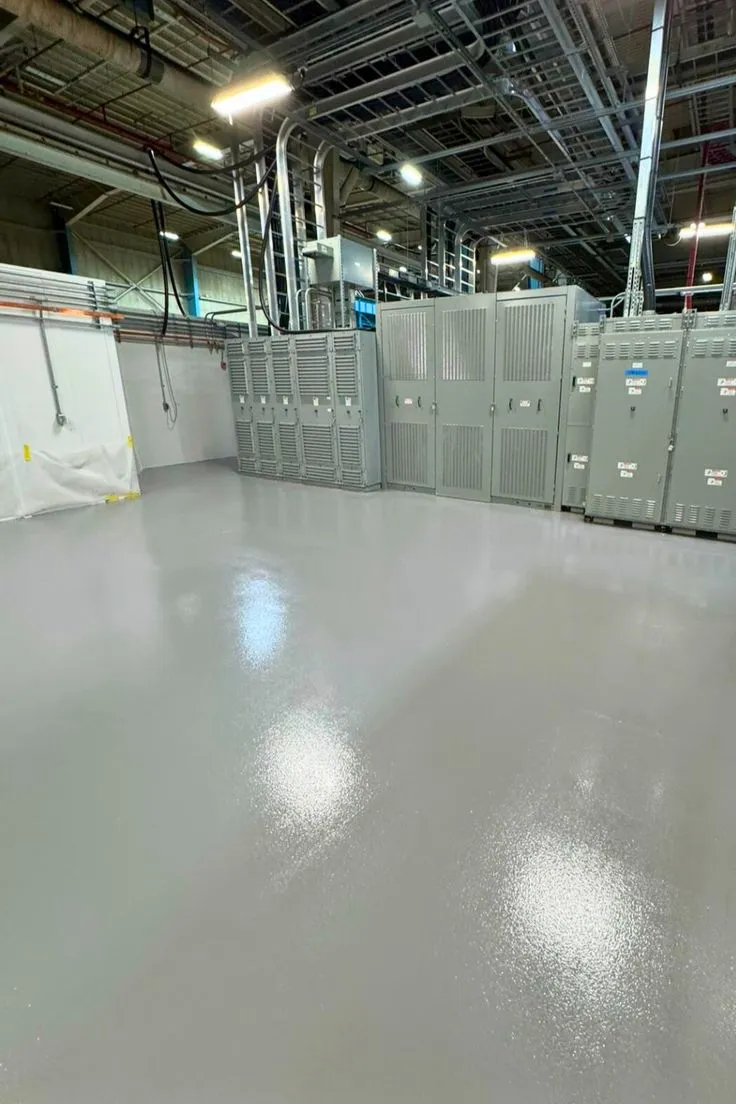
Mechanical rooms are easy to overlook because they are not customer-facing spaces, yet they contain some of the most important equipment in a commercial or industrial building. Pumps, HVAC units, boilers, generators, piping, and electrical controls can expose the floor to vibration, oil, condensation, thermal changes, and heavy maintenance traffic. A floor in this environment therefore needs to support safe access, simplify maintenance, and protect the concrete beneath essential building systems.
Equipment Access Shapes Floor Design
Mechanical rooms are often crowded with fixed equipment, pipes, valves, platforms, and narrow service routes. Maintenance technicians need enough traction to move safely while carrying tools or inspecting machinery.
The floor should also remain practical to clean around equipment bases and walls. Areas that are difficult to reach can collect oil or moisture over time. When planning Mechanical Room Flooring In Usa, facility managers should consider how technicians actually move through the room instead of treating the floor as one open area.
Vibration Creates Different Stress
Pumps, compressors, air-handling equipment, and generators can transmit continuous vibration to the surrounding slab. That makes mechanical rooms different from ordinary offices or storage spaces.
Small cracks may develop or existing defects can become more noticeable over time. Flooring systems in these spaces should therefore be selected after the slab is inspected for cracks, previous repairs, and movement. Flexible resin layers or crack-bridging approaches may be appropriate in some situations, depending on the equipment and substrate.
Moisture Often Comes From Equipment
Mechanical rooms may experience condensation, leaking valves, drain lines, or occasional maintenance spills. Even when the room is normally dry, these sources can create localized wet areas.
A seamless resinous surface can help limit direct exposure of the concrete to water and service fluids. However, drainage and leak control still matter. A coating cannot correct a leaking pipe or poorly sloped floor, so those issues should be addressed separately.
Chemical Exposure Should Be Documented
Oil, coolant, cleaners, water-treatment chemicals, and other service fluids can reach the floor during equipment operation or maintenance. Their frequency and concentration should be discussed before a flooring system is selected.
Not every resin system has identical chemical resistance. Managers should provide contractors with a realistic list of substances used in the room. This helps guide the selection of primers, build coats, and protective topcoats around actual operating conditions.
Preparation Is Critical Around Fixed Equipment
Mechanical preparation is essential for reliable adhesion, but mechanical rooms can make that work difficult. Large grinders can access open sections efficiently, while equipment bases, columns, edges, and tight corners require additional attention.
A qualified Resin Floor Contractor In New Jersey should explain how old coatings, weak concrete, contaminants, cracks, and spalled areas will be handled before the new system is applied. Thorough preparation is especially important where leaks or oils may have affected the slab.
Texture Needs a Practical Balance
Additional traction can be useful around pumps, drain points, or areas where condensation develops. Yet an extremely rough floor can make cleaning around machinery unnecessarily difficult.
The best texture depends on moisture, employee footwear, cleaning procedures, and service access. A mechanical room may benefit from different texture levels in higher-risk areas rather than one aggressive finish across the entire floor.
Downtime Must Coordinate With Maintenance
Mechanical rooms often contain equipment that cannot simply be switched off for long periods. Flooring work therefore requires coordination with facility engineers and maintenance teams.
Sections may need to be completed during planned shutdowns or maintenance windows. Contractors should establish which areas must be isolated and when foot traffic or service carts can safely return after application.
Inspection Should Continue After Installation
Once the new floor is in service, maintenance teams should inspect areas around pumps, drains, equipment bases, joints, and access routes. These locations experience concentrated exposure and may reveal developing problems earlier than open floor areas.
Small chips, cracks, or damaged edges should be evaluated before repeated moisture or traffic enlarges them. Records of recurring issues can also help identify whether equipment leaks or vibration are contributing to wear.
Conclusion
Mechanical room flooring should be treated as part of a building’s operational infrastructure rather than a decorative finish. Heavy equipment, vibration, moisture, chemicals, restricted access, and maintenance traffic all create demands that differ from ordinary commercial spaces.
A successful project begins with the concrete condition and the way the room is actually used. By combining proper preparation, suitable materials, balanced texture, realistic scheduling, and routine inspection, facility managers can create a surface that supports safer maintenance and more dependable long-term operation around critical building equipment.
